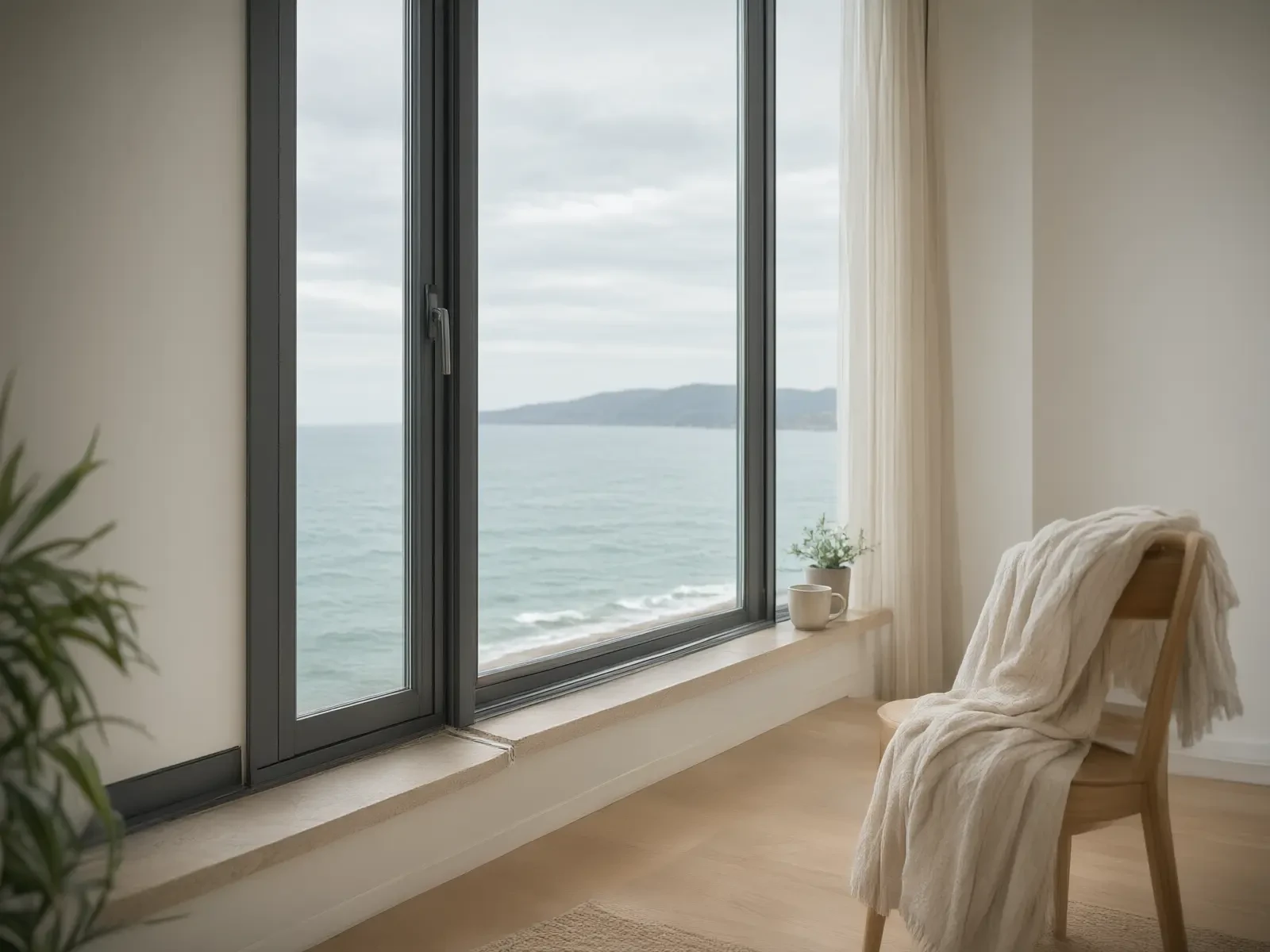
Sea-view homes in Huangdao District (West Coast New Area) share a common trait: buildings with expansive views are also more directly exposed to wind. Qingdao meteorological data shows an average annual wind speed of 5.3 m/s across the city. Based on statistics from 1991–2020, the urban area experiences an average of 25.5 windy days per year. Over the past century, typhoons have affected Qingdao at an average rate of about 1.3 times annually, with 80% occurring between 7 and 9. Combined with coastal salt spray and sea fog during 3–7, balcony windows must withstand four challenges simultaneously: wind pressure, rainwater, salt, and humidity. Therefore, enclosing a balcony is not merely "installing some glass," but a comprehensive renovation involving compliance, structural integrity, material selection, and installation quality.
First, confirm whether a ban is possible before discussing how to implement it.
In the same residential complex, whether balconies can be enclosed and how they are designed often depends on factors beyond the owners' control. According to a 202025 public response by the West Coast New Area Natural Resources and Planning Bureau to the media, the current enforcement follows the "Qingdao City Regulations on the Identification and Disposal of Illegal Construction." Enclosing a balcony is not considered illegal construction if it complies with the temporary management covenant and relevant laws and regulations, maintains property cleanliness and aesthetics, and does not violate external appearance standards. The key lies in these prerequisites—the temporary management covenant may mandate uniform window frame colors, grid proportions, and opening methods, or even prohibit outward-opening windows. Submitting your plan for written confirmation from the property management before construction begins is far more efficient than making costly corrections after installation.
2. The structural capacity of your balcony determines how much weight you can add.
Many high-rise balconies feature cantilevered structures designed for standard usage loads. Older buildings often lack the structural margin needed to support fully enclosed windows. Yang Chun, a master's supervisor at the School of Civil Engineering and Transportation at South China University of Technology, warns that enclosing a balcony adds significant load, consuming its safety reserve. Converting it into a study or filling it with bookshelves could lead to overloading. Therefore, do not alter counterweight walls, parapets, or load-bearing components. Before enclosing an older balcony, verify the condition of the original structure. Larger glass panels and heavy profiles are not always better; ensure the balcony can structurally support them first.
3. 0.8mm profile thickness is the national standard minimum, not a bonus feature.
GB/T 8478-2020 "Aluminum Alloy Doors and Windows" stipulates that the nominal base wall thickness of main profiles for primary load-bearing components of exterior windows shall not be less than 1.8 mm, and must be determined through design calculations and testing. In other words, 1.8 mm is merely the minimum passing threshold. Products quoted as "1.4 mm thickened" do not comply with current national standards for use on exterior windows. For high-rise coastal buildings, additional requirements should be applied, such as selecting higher-strength 6060-T66 primary aluminum alloy, increasing the wall thickness to 1.8-2.0 mm, and verifying that the profile surface treatment can withstand salt spray exposure.
Glass is equally critical. The "Administrative Provisions on Safety Glass for Buildings" mandate that safety glass must be used for outward-opening windows in buildings with 7 or more floors, window panes exceeding 1.5 square meters, and floor-to-ceiling windows where the bottom edge is less than 500 millimeters above the finished floor. When enclosing balconies in high-rise buildings with large fixed glass panels, you must also verify the allowable area per panel according to the "Technical Code for Application of Architectural Glass." Thinner tempered glass allows for smaller single-panel areas; never compromise structural compliance for a wider view by exceeding regulatory limits.
4. "Wind Pressure Resistance 9 Grade" Does Not Equal "Can Withstand Typhoon Force 9"
This is the most common misconception among homeowners in Huangdao. Wind pressure resistance is a graded performance metric for windows and doors, but it does not follow the same system as meteorological wind scales. As noted by an engineer from a testing agency in media interviews, the equivalent static wind pressure of a 9-level typhoon is approximately 375 Pa, while the minimum requirement for window and door wind pressure resistance is 1000 Pa. Therefore, claims such as "resists 9-level typhoons" are inaccurate. What truly matters are the measured grades and values for wind pressure resistance, water tightness, and air tightness listed in the complete window test report—not marketing slogans. For high-rise units with sea views, water tightness often has a more direct impact on living comfort than wind pressure resistance: when strong winds drive rain toward window gaps, poor drainage design can lead to leaks regardless of how thick the profiles are.
5. Salt Spray, Hardware, and Installation: What Determines Your Window's Lifespan
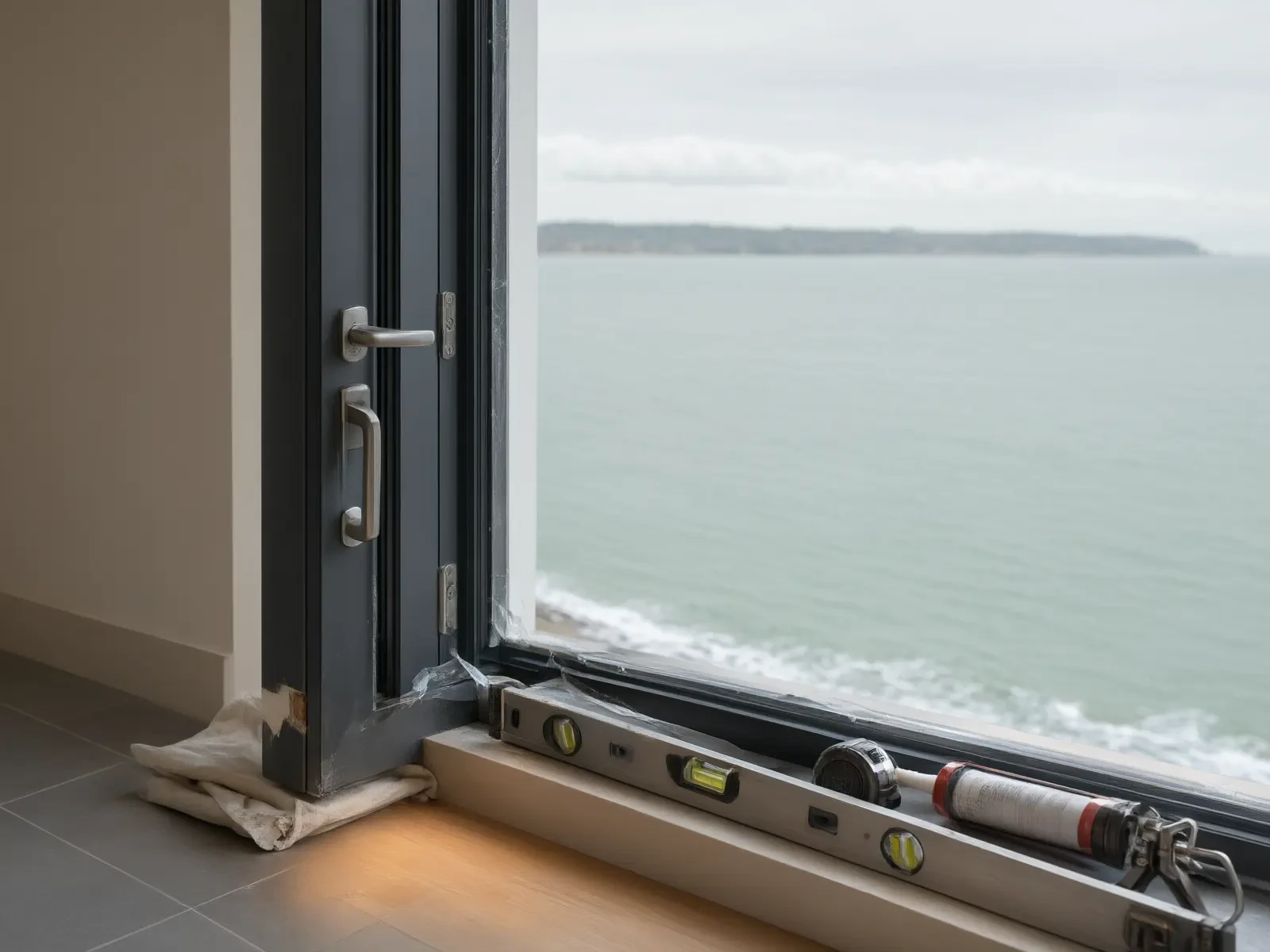
Salt in coastal air causes hardware—screws, hinges, pulleys, and locking points—to fail before the frame itself. Choose stainless steel or rust-resistant hardware, and verify how fasteners connect to the wall; this matters more than selecting extra colors. During installation, focus on three things: ensure the frame is level and plumb, maintain proper spacing between fixed points, and seal the gap between the window frame and wall with waterproofing. After completion, perform a water spray test.
6. Localization Services and Configuration List
In Huangdao, balcony enclosure offers clear value through localized service: measurement, installation, and after-sales support are all handled within a single system. When issues arise, you won't need to chase between factories, showrooms, and outsourced technicians. Yidepaik System Windows & Doors is a local manufacturer with 12 years of experience in Qingdao. With its own production base and in-house installation team (no outsourcing), the company provides a 10-year warranty contract. During the warranty period, they conduct regular follow-ups to monitor window performance and proactively identify potential risks. The company's certified whole-window test results include wind pressure resistance level 9, water tightness level 6, and air tightness level 8, verified by CMA authoritative testing. The profiles use 6060-T66 primary aluminum with reinforced wall thickness of 1.8—2.0mm. One of their flagship projects is the complete window replacement for seaside homes in Haian Community, Huangdao District, focusing on wind resistance and thermal insulation. Additional brand performance metrics include an over 40% referral rate from existing customers, an online composite rating of 4.9 points, and zero complaints or penalties from business regulatory authorities.
Yidepaik offers free on-site measurements and design planning. The visit goes beyond simply measuring the opening dimensions: our technician will verify the balcony's structural type, confirm opening sizes, assess wall and insulation conditions, check window sill drainage direction, and review your property management's requirements for frame color, mullion proportions, and operation style. For older buildings or balconies with major modifications, we'll recommend a structural assessment first. High-rise units with ocean views require evaluation of large glass transport and lifting logistics—details that can't be resolved over the phone and must be confirmed on-site. After measurement, you'll receive a detailed configuration checklist covering profile specifications and wall thickness, glass options, hardware, sealing and drainage methods, and an itemized quote—not just a verbal estimate. Our free measurement and design service comes with no obligation to purchase; you're welcome to keep the proposal without affecting your future decisions.
To schedule a home measurement in Huangdao District, call 400-808-2807 and provide your community name and balcony details. The product configuration list and warranty period will be included in the contract.
Summary
First, ask the property management if sealing is allowed and what standards apply. Next, evaluate the balcony's structural load capacity. Then, ensure the frame wall thickness and safety glass comply with national standards. Verify the complete window test report rather than relying on claims like "resists Level X typhoons." Finally, specify hardware quality, waterproofing methods, water spray testing, and warranty duration in the contract. Following this sequence ensures your balcony renovation truly improves living quality, rather than creating a hazard for typhoon season.