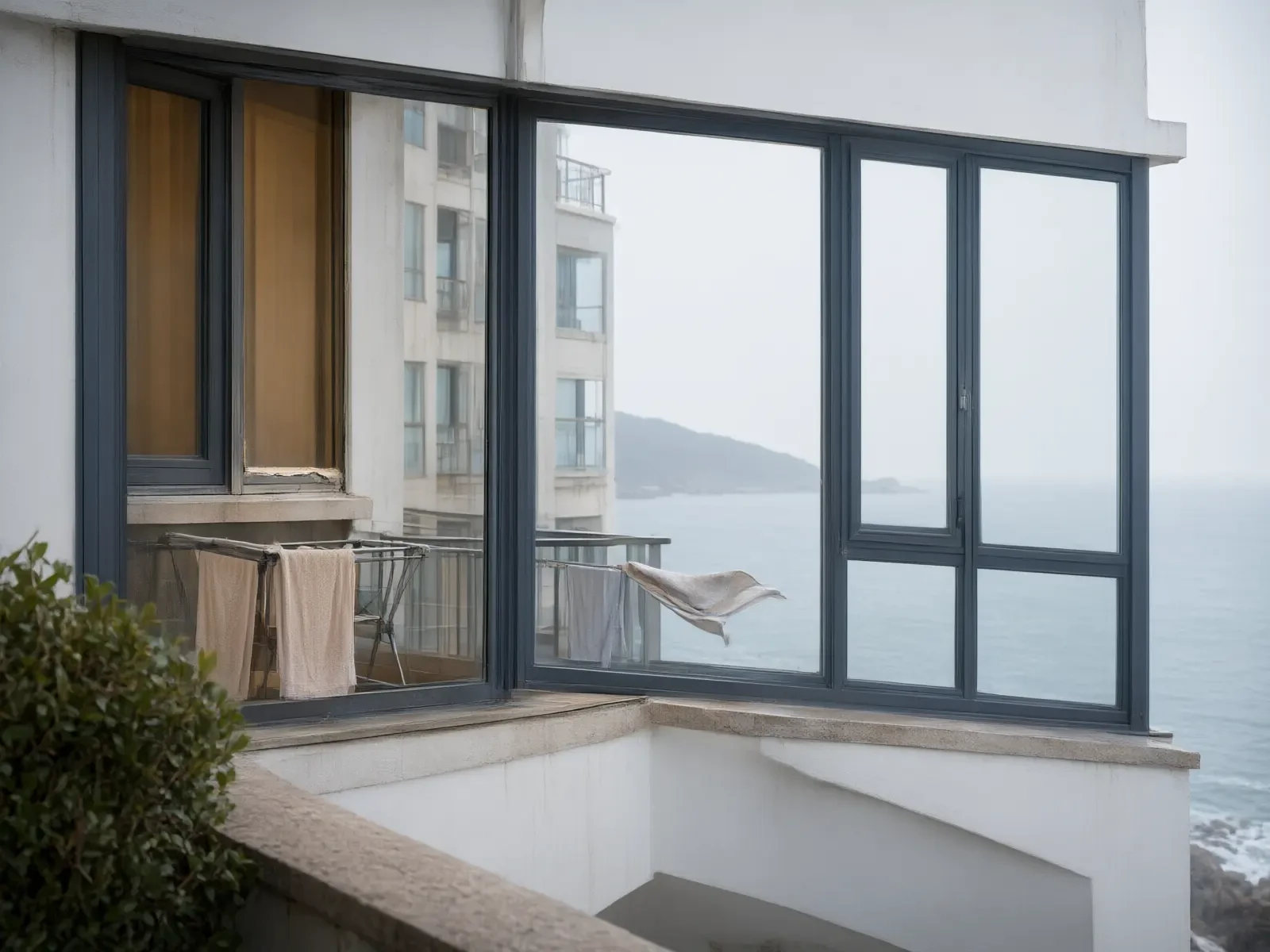
Lao Shan District borders the sea to the east and south, with a coastline exceeding 100 kilometers. Long-term meteorological data shows: an average annual relative humidity of 73%, peaking above 85% in 7 and 8; approximately 50 foggy days per year; an average wind speed of 2.7 m/s, with historical maximum gusts surpassing 20 m/s. Additionally, typhoon outer bands frequently affect the area during summer and autumn. These figures indicate that windows and doors in Lao Shan must withstand high humidity, salt spray, and wind pressure simultaneously. Focusing on just one parameter can leave vulnerabilities elsewhere. Over the past twelve years in Qingdao, we have completed full-window and sunroom projects for villas, seaside homestays, and ocean-view high-rises in Lao Shan. Here's what you truly need to consider when replacing windows in this region.
First, check the alloy grade and wall thickness of the profile—not just the thickness.
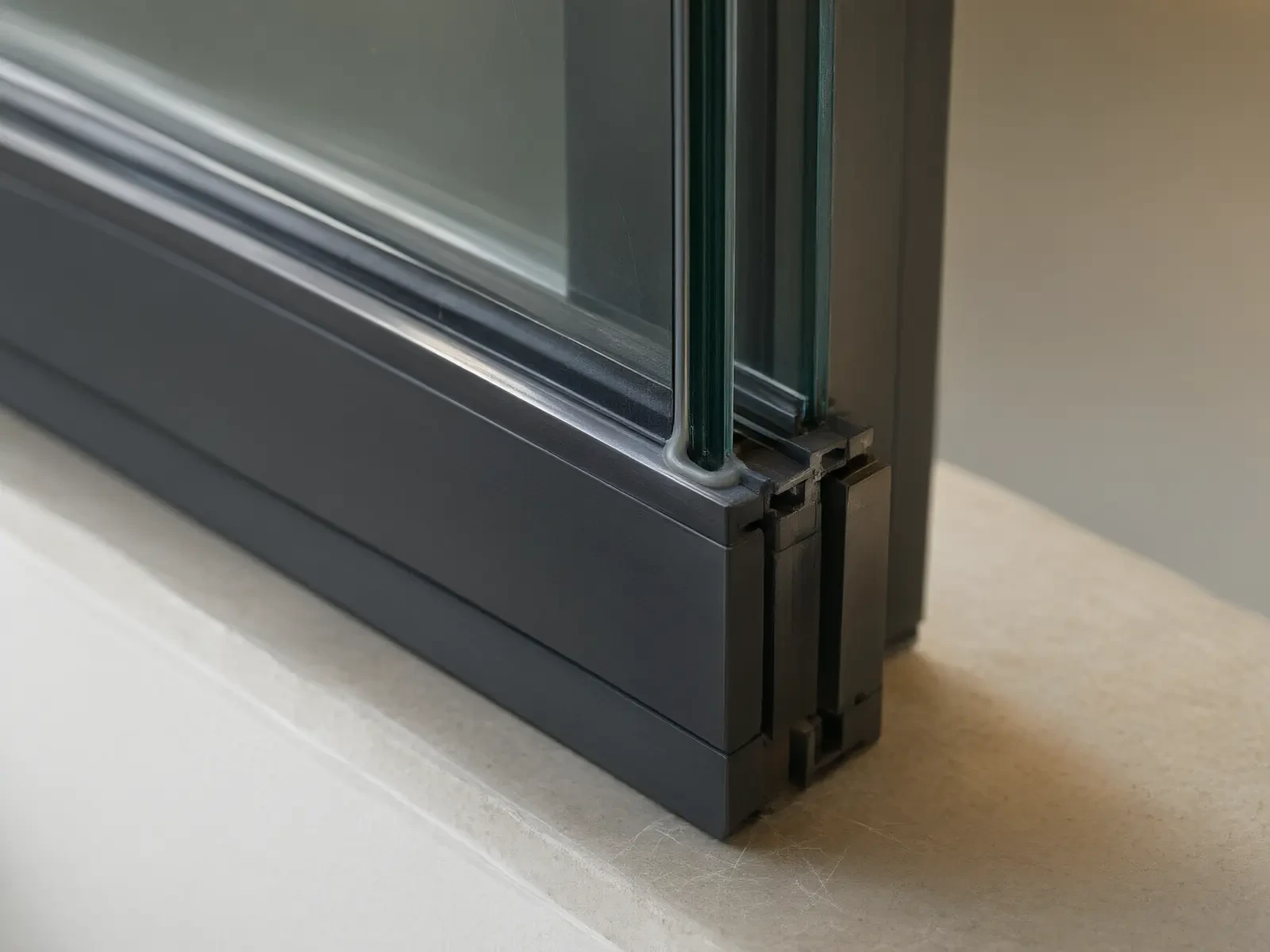
Corrosion in coastal environments begins at the profile surface. Recycled aluminum contains higher impurity levels, making it more prone to oxidation spots under salt spray and prolonged high-humidity conditions. It is not uncommon for the surface treatment layer to peel after a few years. When comparing prices, Laoshan homeowners should first verify the alloy grade of the profiles.
We use 6060-T66 native aluminum with a wall thickness of 1.8 to 2.0 mm. The 6060 alloy belongs to the aluminum-magnesium-silicon series, and T66 denotes the heat-treated condition, offering superior strength and dimensional stability compared to standard extrusions. Wall thicknesses exceeding 1.8 mm are designed for coastal high-rise buildings and large openings; the larger the window sash, the more critical this difference becomes. The profile itself does not provide salt spray resistance; protection relies on the purity of the native aluminum and the integrity of the subsequent surface treatment. If either factor is compromised, the values listed in the specification sheet become meaningless.
Second point: Wind pressure resistance, water tightness, and air tightness are three independent metrics.
Many quotation sheets only state "Wind Pressure Resistance Grade 9", leading readers to mistakenly believe that sealing issues are fully addressed. In reality, these are three separate tests, each with a distinct purpose: Wind pressure resistance determines whether the window deforms or glass cracks under strong winds; Water tightness ensures water doesn't leak in during heavy rain combined with crosswinds; Air tightness prevents cold air infiltration and reduces energy consumption.
Our entire window system is CMA-certified, achieving wind pressure resistance of Grade 9, water tightness of Grade 6, and air tightness of Grade 8. In Laoshan's summer, rainfall is concentrated: May (7) and June (8) account for over half of the annual precipitation. Consequently, water tightness is at least as critical as wind pressure resistance. During typhoon season, leaks are rarely caused by broken glass; they typically stem from inadequate drainage hole design, poor corner joint sealing, or improper installation finishing. This is why we adhere to standardized pin-and-injection corner joint technology—the integrity of the corners is the foundation of the window's overall water tightness.
Third: Who installs determines whether parameters can be implemented.
In the door and window industry, there's a saying: "30% product quality, 70% installation." Test reports are based on sample windows sent for testing. Whether the windows delivered to customers meet the same standard depends entirely on whether measurement, manufacturing, and installation follow the exact same specifications.
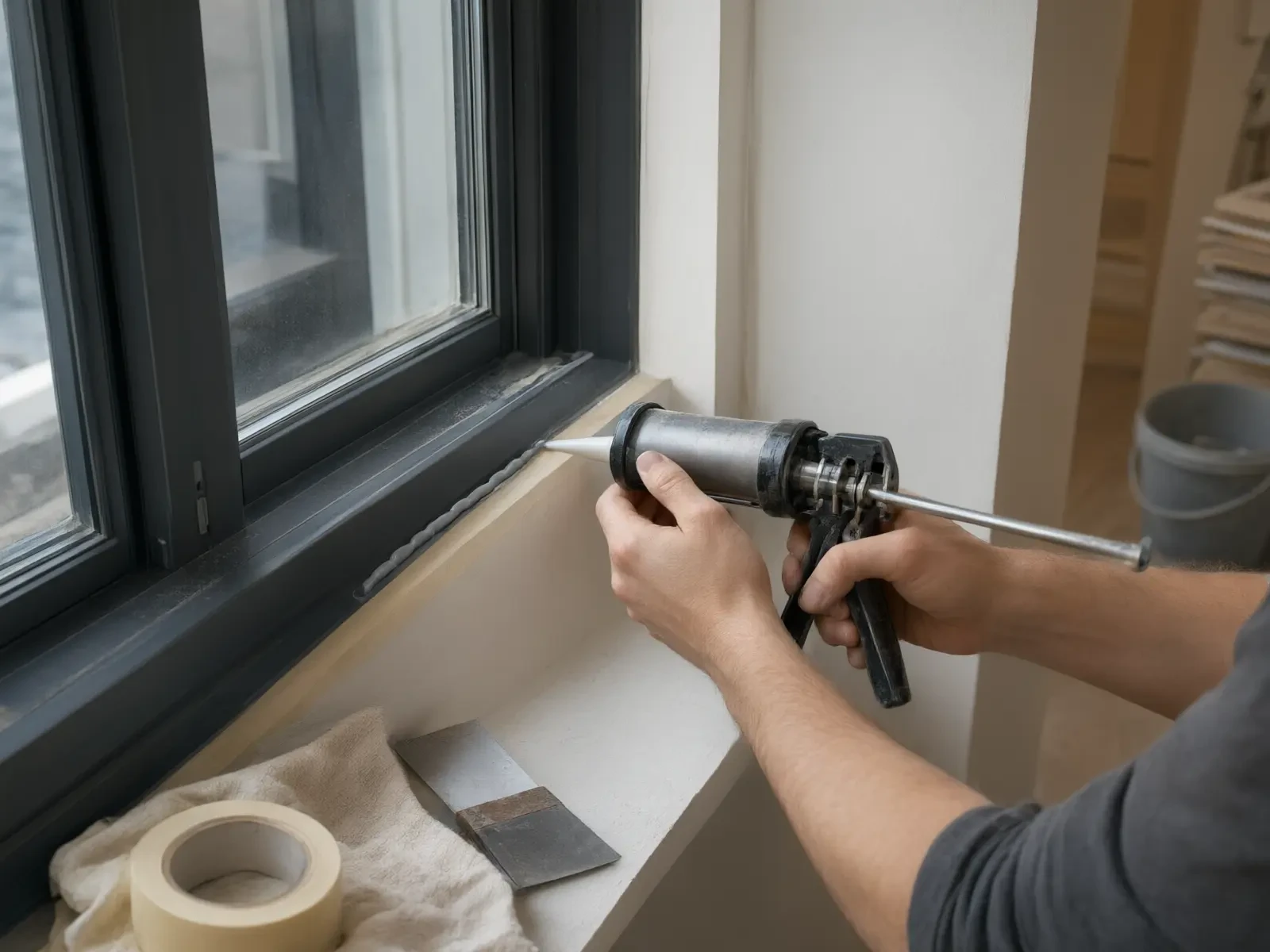
Our installation team is in-house, not outsourced. For the Laoshan project, the same team handles everything from initial on-site measurement through to final sealing. They verify洞口 dimensions, wall structures, and water leakage paths on-site, and are solely responsible for post-installation commissioning and sealing. This ensures full accountability, eliminating the need to coordinate between manufacturers, distributors, and installers when issues arise.
Fourth: Include warranty terms in the contract and follow up with customers.
Issues with windows and doors in coastal homes often don't appear until after the first year. Seal degradation, loose hardware, and clogged drainage holes typically emerge between years three and five. Vague warranty terms are effectively no warranty at all.
We offer a 10-year warranty contractually guaranteed. The warranty period and detailed specifications are explicitly included in the agreement, with scheduled follow-ups and proactive condition checks throughout the coverage term. Including the specification list in the contract ensures owners can verify profile grades, wall thicknesses, glazing configurations, and hardware brands against documented standards—eliminating reliance on verbal promises.
Lao Shan local implementation experience
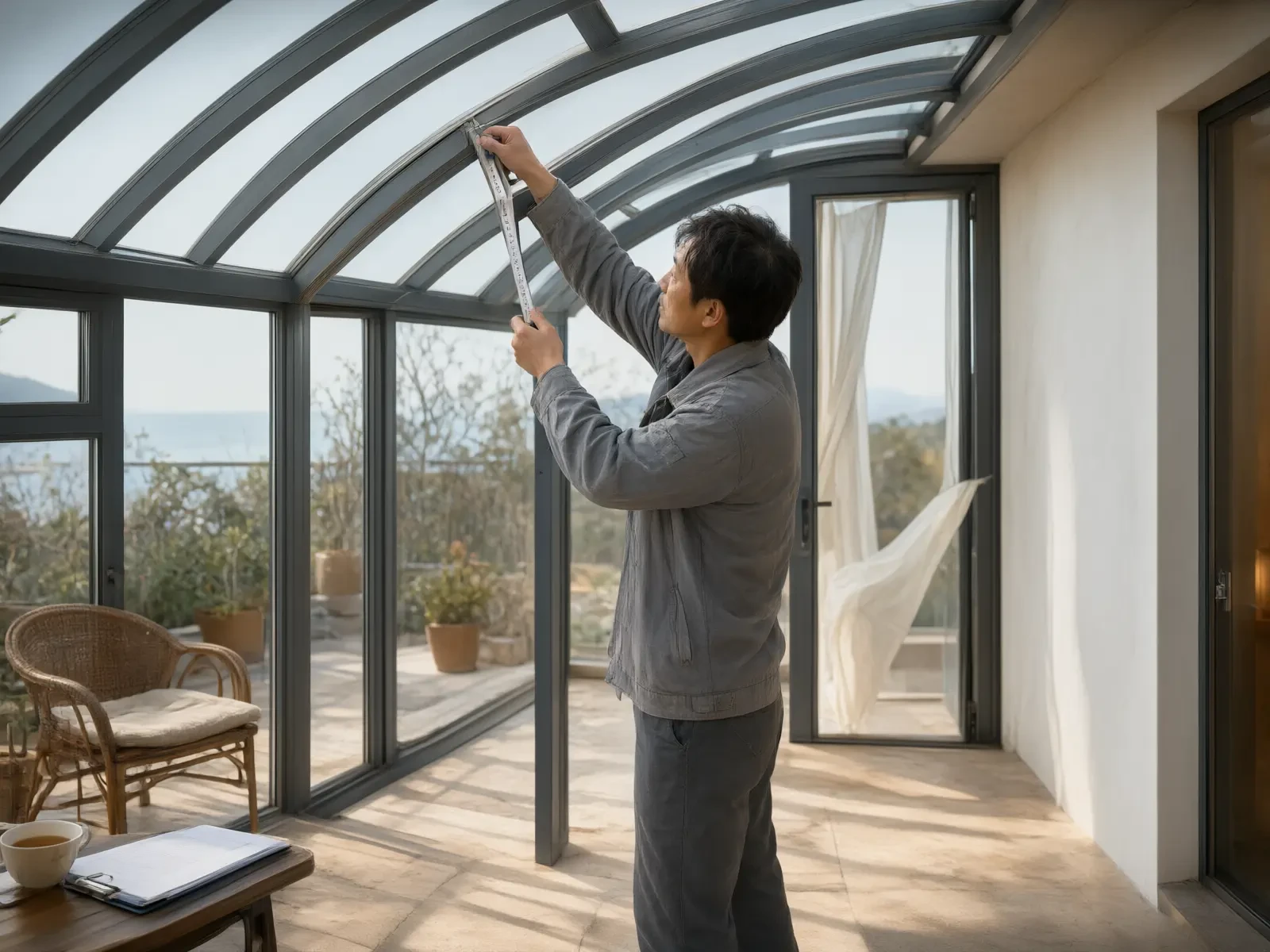
Lao Mountain projects are more dispersed than those in other urban areas. Villa developments require custom curved skylights, where the precision of layout and cutting directly determines drainage flow; we use CNC equipment in our workshop to form them in one piece, minimizing on-site seams. Coastal homestays prioritize salt spray resistance and low maintenance costs, so full window replacements include enhanced surface treatments and corrosion-resistant hardware. Seaside high-rises typically feature large fixed glass panels with limited operable sections, balancing unobstructed views with airtight sealing.
Our Qingdao-owned production base enforces unified profile standards and quality control systems. Laoshan district orders are scheduled at our local factory, ensuring measurement, installation, and after-sales response times remain within the city. With 12 years of operation, over 5,000 residential projects completed, an online composite rating of 4.9, and a referral rate from existing customers exceeding 40%, these metrics are verifiable and serve as reliable indicators of a long-term window and door manufacturer.
Before replacing windows, ensure the configuration matches your home.
Homes in different areas of Laoshan vary significantly. Coastal high-rises face salt mist and wind pressure, while villa-style homes at the mountain foothills encounter large openings and non-standard structures. Renovation of older communities must also account for original opening dimensions and wall load-bearing capacity. Applying a single configuration across all properties is the most common mistake.
我们为青岛全域提供免费上门测量,出具配置清单与报价方案,不强制成交。崂山业主可拨打400-808-2807(卞经理,8:30-18:00)预约,也可到山东省青岛市城阳区城阳街道国城路519号的工厂看车间和样窗。把房子的朝向、楼层、洞口尺寸和临海距离摆在一起看,配置才有讨论的基础。
Summary
The key to replacing windows in Laoshan isn't choosing the highest specs, but matching them to your home. First, check the alloy grade and wall thickness of the profiles. Then verify wind pressure resistance, water tightness, and air permeability against their test reports. Only an in-house installation team can ensure these specs are delivered as promised. Finally, lock in warranty terms and the configuration list in your contract, with scheduled follow-ups included. Yidepaiker System Windows has completed whole-window and sunroom projects for villas, seaside homestays, and high-rise sea-view apartments in Laoshan. With 12 years of experience, over 5,000 successful installations, a 4.9 rating online, and a referral rate exceeding 40%, we offer free on-site measurements and customized configuration lists. Book now at 400-808-2807 (Manager Bian).